Part1 Ogasawara Village and Nichirei,
Connected by an Ice Plant
Share this article
Special Feature: The Story of Ogasawara Village and Nichirei, Protecting the Future of Wildlife
Part1 Ogasawara Village and Nichirei,
Connected by an Ice Plant
The Ogasawara Islands are located approximately 1,000 km south of Tokyo.
One of these islands, Chichijima, has a connection with Nichirei.
Let's take a look at the story connected by the ice plant.
The Ogasawara Islands, where a unique nature and culture have been formed
The islands are home to blue seas, magnificent skies, and endemic species.
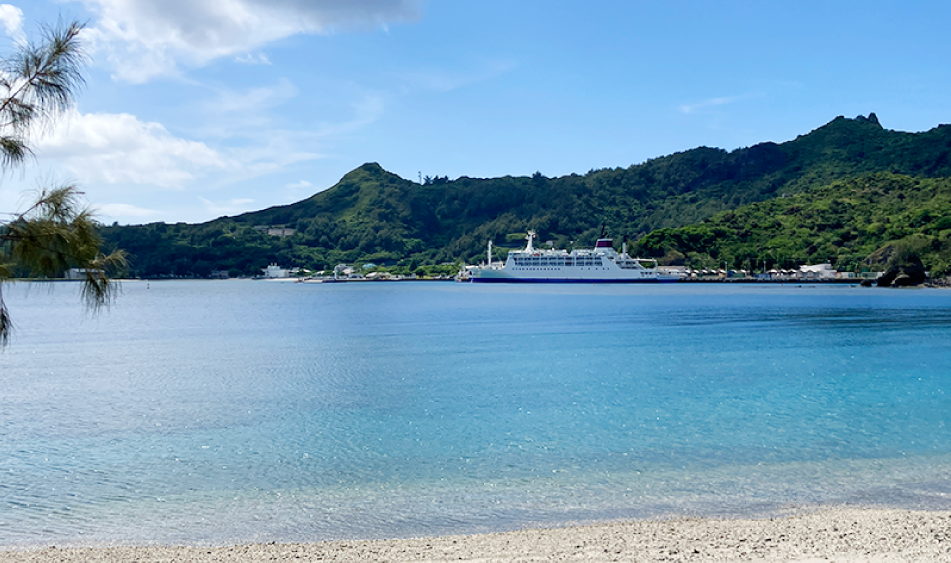
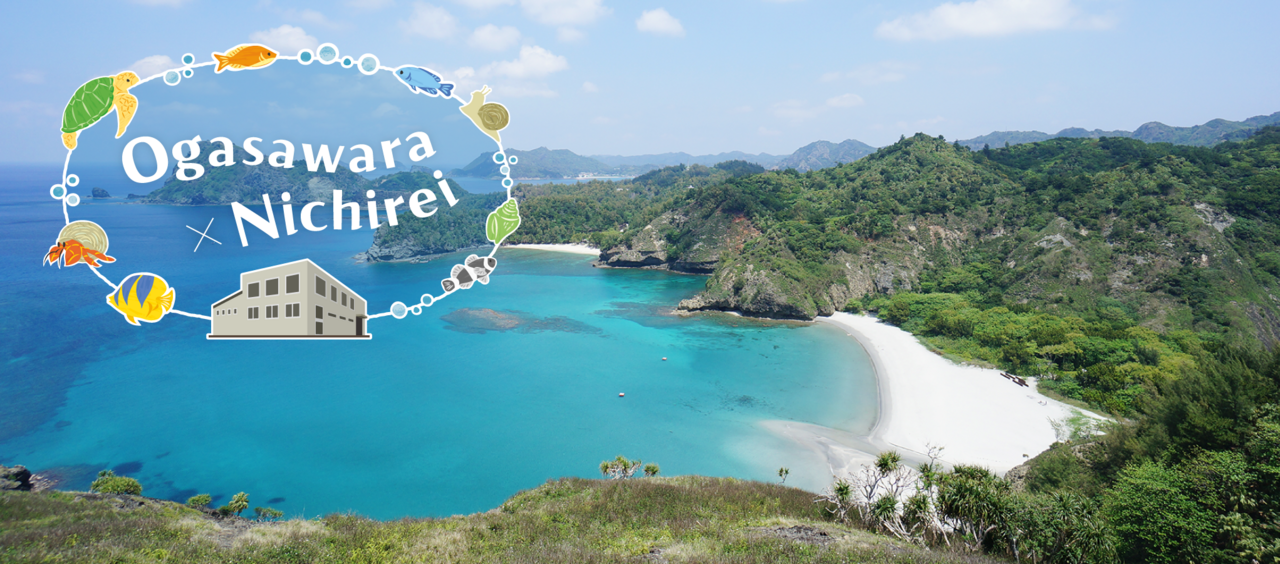
The Ogasawara Islands consist of more than 30 islands, including the Chichijima and Hahajima islands, Iwo Jima, Japan's southernmost Okinotorishima, and Japan's easternmost Minamitori Island.
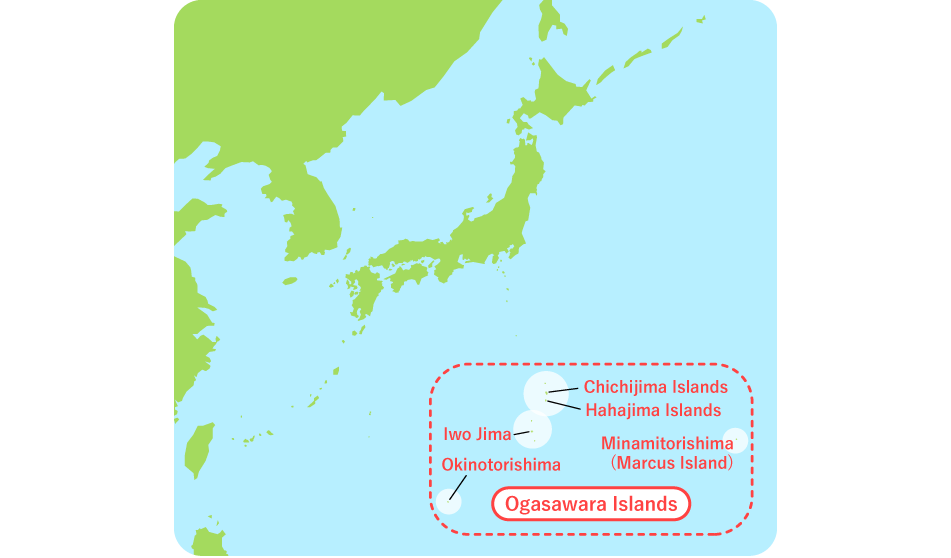
The Ogasawara Islands, which were known as "Bonin Islands" until about 200 years ago, became inhabited only after the 19th century, when whaling activities in the Pacific flourished.
It is said that the first permanent settlers were Westerners and Pacific Islanders who arrived in 1830 to supply water and food to whaling ships*.
From there, the islands' appeal spread, and today there are more than 2,000 residents on Chichijima and more than 400 on Hahajima (as of November 1, 2025).
*Source: "History of Chichijima," Bureau of Environment, Tokyo Metropolitan Government
Ogasawara Village and Nichirei Connected by Ice Plant
In 1923, Chichijima was home to an ice plant built by Nitto Ice Manufacturing Co., Ltd., one of Nichirei's predecessor ice manufacturing companies.
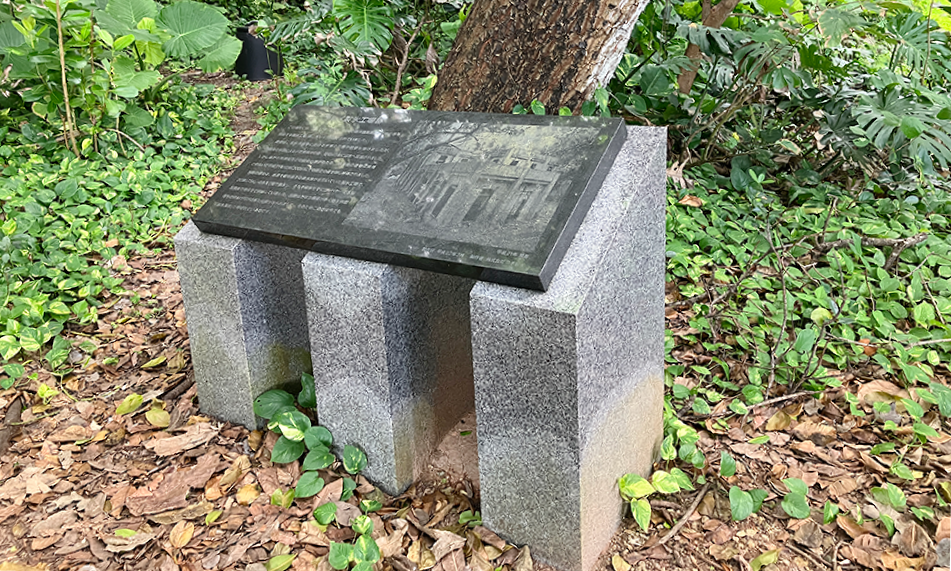
Nichirei Ice Plant Monument
Today, ice is easily accessible to the average household, but in the past, it was a luxury that only the upper classes could enjoy.
After the opening of Japan to the West, the use of ice was introduced to Japan from the West and its usefulness in medicine and food preservation became known. This led to the spread of natural ice harvesting in Japan.
Later, as demand increased, the technology to artificially produce ice was developed. Nitto Ice Manufacturing Co., Ltd. built mechanical ice-making companies and ice plants throughout Japan and worked to ensure a stable supply of ice.
Ice Supplies Supported Fishermen
Why was an ice plant built on Chichijima Islands in the Ogasawara Islands, located approximately 1,000 km from Tokyo?
The reason lies in the development of the fishing industry in the current the South Pacific region, which began in earnest after the Meiji Restoration.
At that time, the distance from the waters of the South Pacific to the Japanese archipelago was approximately 2,000 km.
The Ogasawara Islands, located about halfway between them, were said to be an ideal ice supply point for fishermen on long voyages, as they needed to keep their fish fresh.
Ice with long-lasting cooling effect was essential to keep the fish fresh.
Ice as large as 75 kg was made on the second floor of the ice plant, and then slid down a conveyor to the side of the vessel without breaking up the ice, providing it to the fishermen.
It is said that there was such a high demand at the time that many ships would line up for ice.
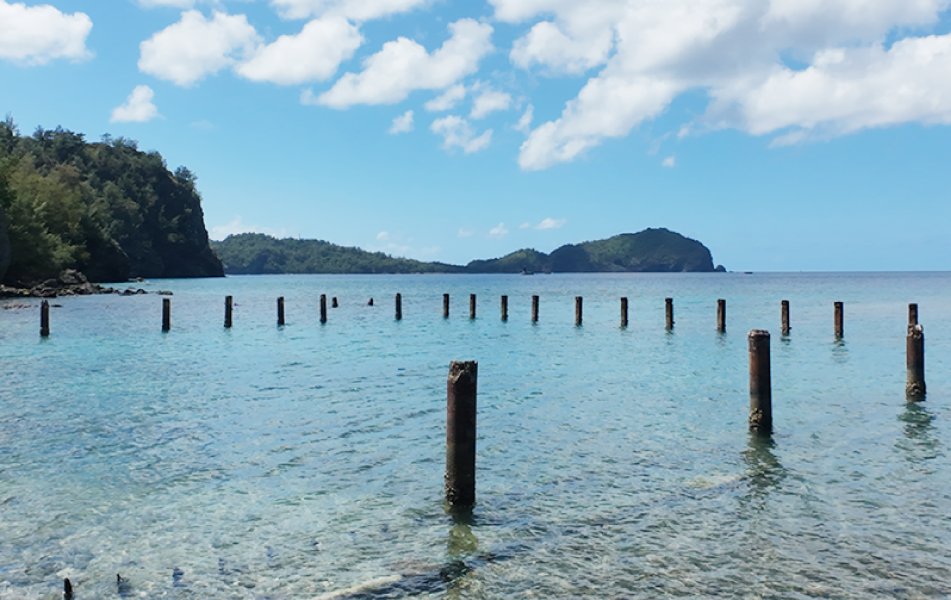
Because the Seihyo Coast was too shallow for ships to reach the shore, ice was transported from the ice plant to the sea by a conveyor that extended to the sea. As a remnant, part of the piers that supported the conveyor still remain.
This is why the beaches near ice plant is called " Seihyo Coast”.
*Seihyo means ice production
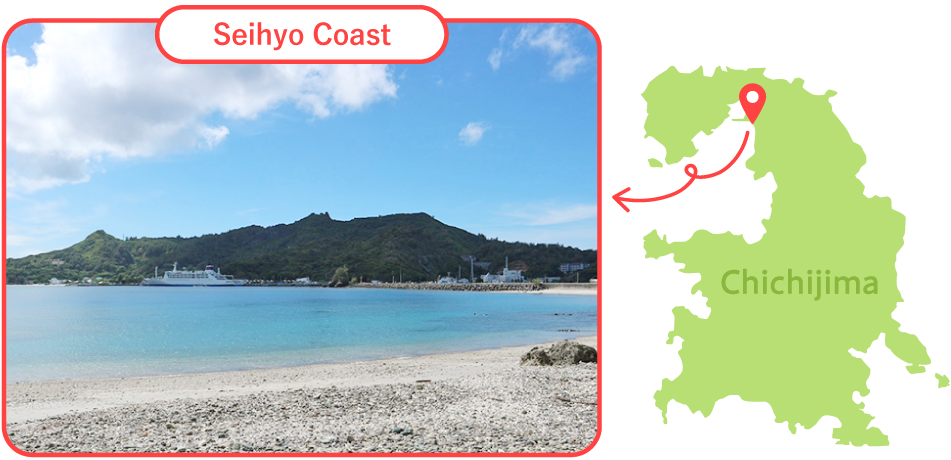
The History of Ogasawara Village and Nichirei: From Showa to Reiwa Era
From the Taisho era (1912-1926) to the early Showa era (1926-1989), the Ogasawara Islands were home to more than 7,000 people who thrived in agriculture and fishing by making the most of the subtropical climate.
Then, in 1941, World War II began fighting in the Pacific region, and the Ogasawara Islands faced a major turning point.
After the war, the Ogasawara Islands are temporarily placed under the jurisdiction of the United States, then returned to Japan in 1968. That same year, Nippon Reizo Inc. (later Nichirei) officially registered the land and buildings of the ice plant as our property.
In December 2009, due to the aging of the buildings and advances in reefer technology leading to a decline in ice demand, the company decided to demolish the ice plant.
Today, the former site is covered with grass and opened to the public free of charge to Ogasawara Village. It is used for community activities such as pandanus leaves crafting and hula dance circles.
Biodiversity Conservation Efforts in Ogasawara Village
The Ogasawara Islands are "ocean islands" that have never been connected to the continent.
As a result, there are many endemic species that have evolved in their own unique way.
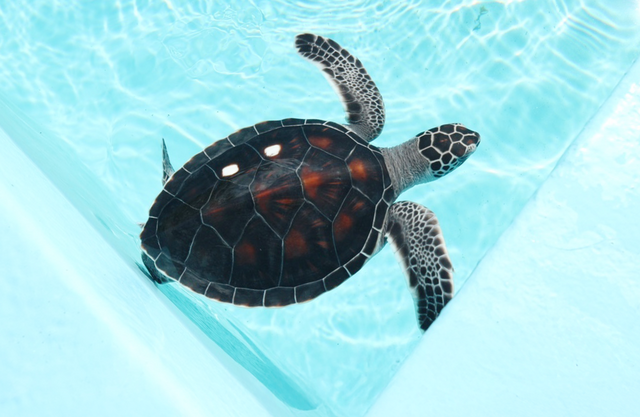
There is also a breeding ground for endangered green sea turtles on the coast of Ogasawara Village.
The Ogasawara Marine Center, run by the certified NPO Everlasting Nature, plays a central role in the conservation of green sea turtles.
The Ogasawara Marine Center provides a variety of hands-on programs for visitors, including the preservation of eggs, breeding and release of hatchlings, shell-polishing and serving experiences.
The Ogasawara Marine Center facilities are located on a portion of Nichirei's company-owned land.
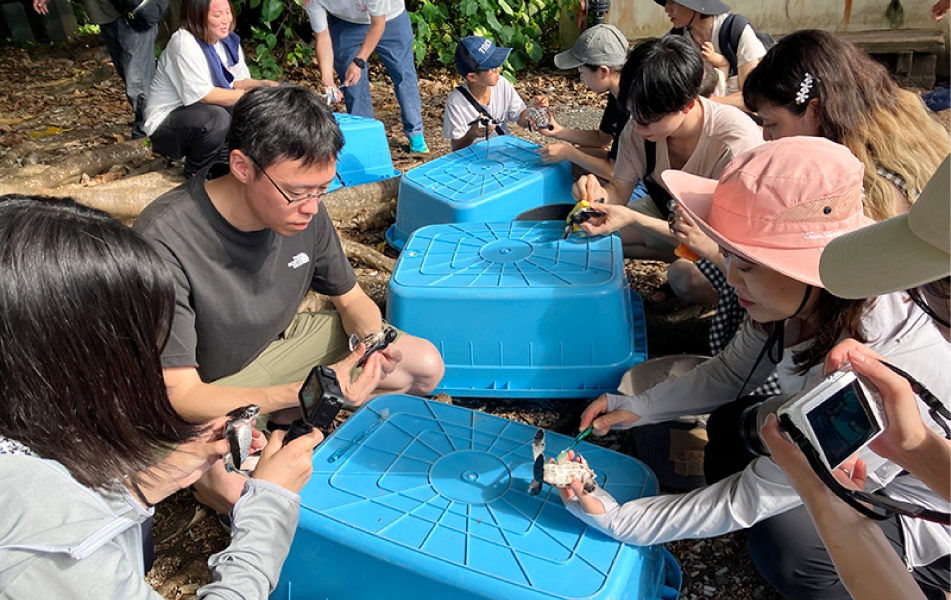
Green sea turtle shell polishing
Nichirei established Nichirei Group Sustainability Policy, "The Nichirei Pledge" in 2022. To realize a sustainable society, Nichirei is committed to cooperating with communities, addressing climate change, and conserving biodiversity.
*Specifically, "Conduct biodiversity conservation activities at Nichirei Group sites and Company-owned land" is set as a goal under the Group Material Matters (Materiality), "Realizing sustainable food procurement and a circular economy.” The activities in Ogasawara are also based on this policy.
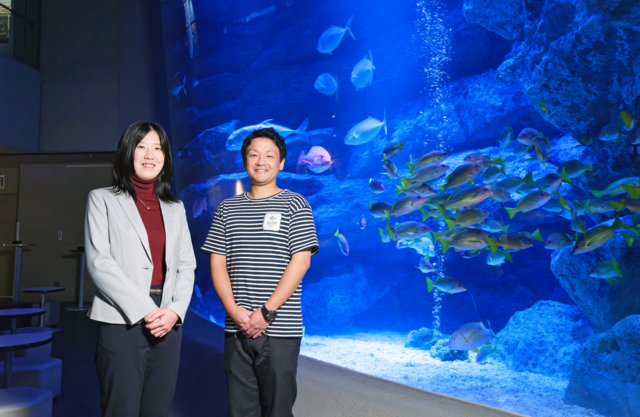
In August 2025, Nichirei concluded a partnership agreement on biodiversity conservation with Sumida Aquarium (Sumida-ku, Tokyo), which is engaged in the social contribution activity "AQTION!”
Through green sea turtle conservation activities, information dissemination about Ogasawara Village, workshops, and other activities, we aim to jointly contribute to local communities and biodiversity conservation.
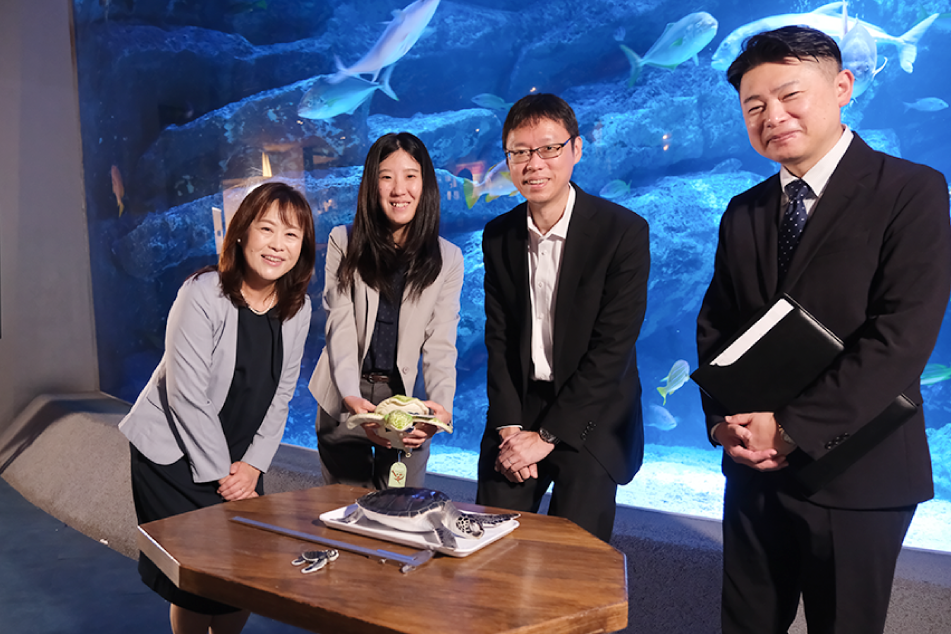
The agreement ceremony at the Sumida Aquarium
Let's take a look at the activities that Nichirei started working on together with Sumida Aquarium in [Part 2: Protecting the Beautiful Sea Green Sea Turtles Conservation Activity Report].
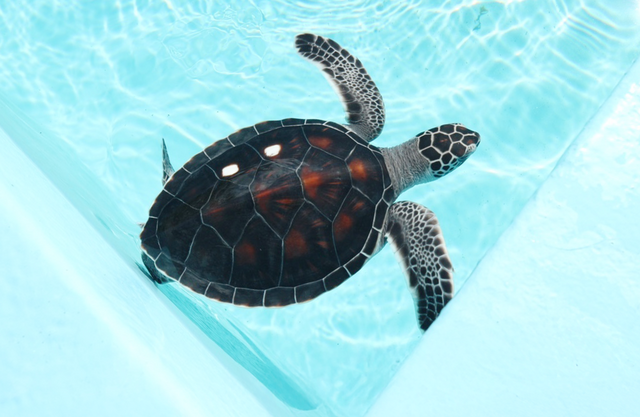
Rare creatures Found in the Ogasawara Islands
Nichirei is collaborating with the Sumida Aquarium in its biodiversity conservation efforts.
We asked a staff member who has worked with the aquarium to tell us about the unique creatures of the Ogasawara Islands.

Sumida Aquarium
Breeding Staff
Mr. Fujiwara.
The Ogasawara Islands are home to many endemic species of living creatures, among which I would like to introduce the mai-mai (snail).
There are about 800 species of mai-mai, ranging from tiny, invisible species to large species with shells as tall as 20 cm, such as the African mai-mai. There are more than 100 species in the Ogasawara Islands alone, of which about 90% are endemic to the islands.
At first glance, the mai-mai may look like a leisurely creature, but if you look closely, you will see that they move surprisingly fast and use their long antennae to find obstacles and avoid them. In addition to the species that live on the ground, there are also those that live in trees, sometimes hanging from trees as if they are about to fall. Their unpredictable movements are so fascinating that you can easily lose track of time watching them.
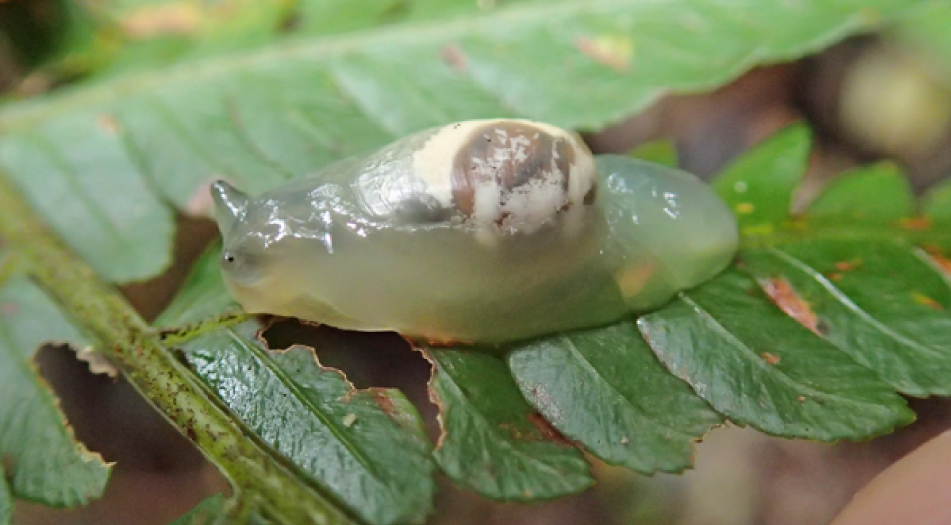
The Ogasawara Okamonoaragai is characterized by its small, reduced shell due to the high humidity of the Ogasawara Islands, and its transparent, jelly-like body. Locals affectionately call them "mizumanju," which means "water dumpling."
However, the maimai is threatened with extinction in the Ogasawara Islands due to various environmental factors.
Sumida Aquarium has also participated in conservation activities since 2024 in cooperation with the Ministry of the Environment's project for the protection and propagation of the maimai. Currently, two species, the Otomekata maimai and the Koganekata maimai, are being bred and exhibited as ex situ conservation.
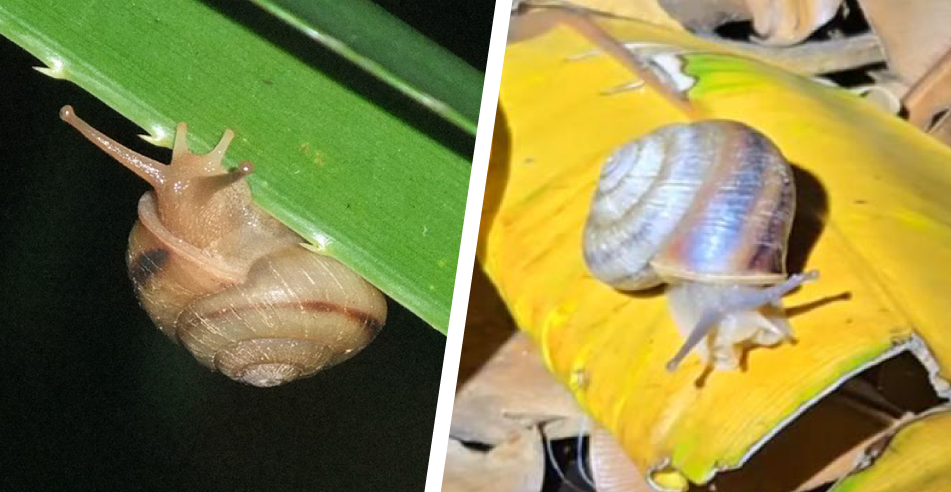
Otomekata maimai (left) and koganekata maimai (right)
Share this article